























Pallet scanning is at the heart of today’s high-visibility, data-driven warehouses and supply chains. It provides a quick and practical way to capture critical details about pallets and the products they contain. That data can help warehouses track pallet movement and, when combined with operational analytics, identify bottlenecks or visibility gaps.
While pallet scanning supports broader efforts to improve warehouse accuracy and efficiency, the act itself can be a point of friction when the process causes slowdowns. This is a common side effect of manual scanning, which creates choke points and can even introduce misreads.
Modern pallet scanning can involve RFID, machine vision, and increasingly, automated solutions. These technologies link the physical movement of pallets and SKUs to digital records, creating data that can support inventory decision-making. The right approach can also help improve accuracy and safety across warehouse workflows.
How Does Pallet Scanning Work in a Warehouse?
Warehouse pallets feature unique identifiers, typically stored within barcodes or RFID tags. These identifiers serve a critical purpose: they form the link between pallets and their digital records. As pallets are scanned, identifiers are captured and, ultimately, sent to centralized warehouse management systems (WMS). There, data can be cross-checked against records even as the inventory status is updated in real time.
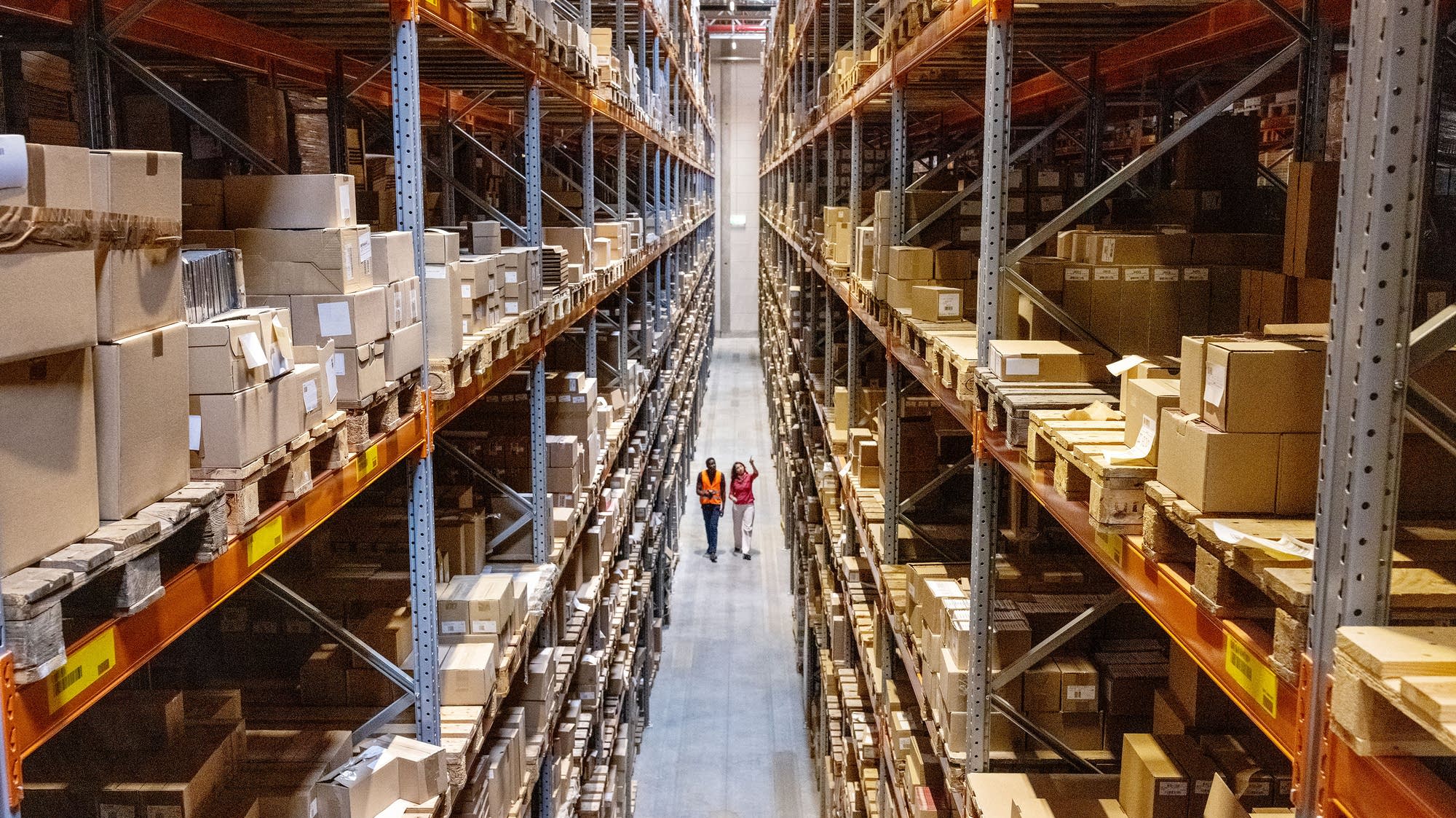
Scanning takes place at several points throughout the warehouse. Wherever pallets change location or status, scanning provides the chance to validate the actual movement of pallets against system records.
Common spots for scanning include receiving docks, shipping docks, and storage areas (such as pallet racking). In receiving, scans verify inbound pallets, while further scans at put-away confirm storage locations. Others track internal movements amid replenishments and transfers. Finally, scans at shipping docks confirm that the right pallets are loaded.
As pallets move through these critical areas, scans make this movement visible and verifiable. Over time, this data is tracked and can be used to support traceability and improve inventory accuracy.
What Pallet Scanning Methods Are Used in Warehouses?
Many scanning methods allow organizations to track pallets as they shift from receiving to storage, staging, and finally, shipping. At these stages, scanning solutions are selected and applied according to warehouse-specific needs or priorities. Methods should be examined in the context of the broader warehouse operation to guide maximum ROI.
Handheld and Forklift-Mounted Scanners
Handheld barcode scanners and mobile computers allow workers to capture pallet barcodes and send that data to connected warehouse systems. Radio frequency (RF) scanners are typically barcode-scanning mobile computers that communicate wirelessly with a warehouse management system; they are different from RFID readers, which detect RFID tags using radio waves.
Forklift-mounted scanners reduce the need for operators to leave the lift truck during put-away and movement. Conventional setups may still require the operator to aim or trigger a scan, while more advanced mounted systems can use fixed readers, cameras, or machine vision to capture pallet information automatically as loads move through the warehouse.
RFID and Fixed Scanning Systems
RFID systems use radio waves to read information stored on tags without requiring direct line of sight. Depending on the application, RFID can also capture multiple tags at once, although performance depends on tag placement, materials, reader configuration, and the surrounding environment.
Fixed barcode or RFID readers can automatically capture pallet information at defined checkpoints such as dock doors and conveyors. These systems reduce manual data capture and are well suited to higher-volume, repeatable workflows.
Camera-based machine vision adds another layer of automated data capture by reading labels visually and supporting functions such as verification, inspection, and image documentation.
Automated Vision-Based Pallet Scanning
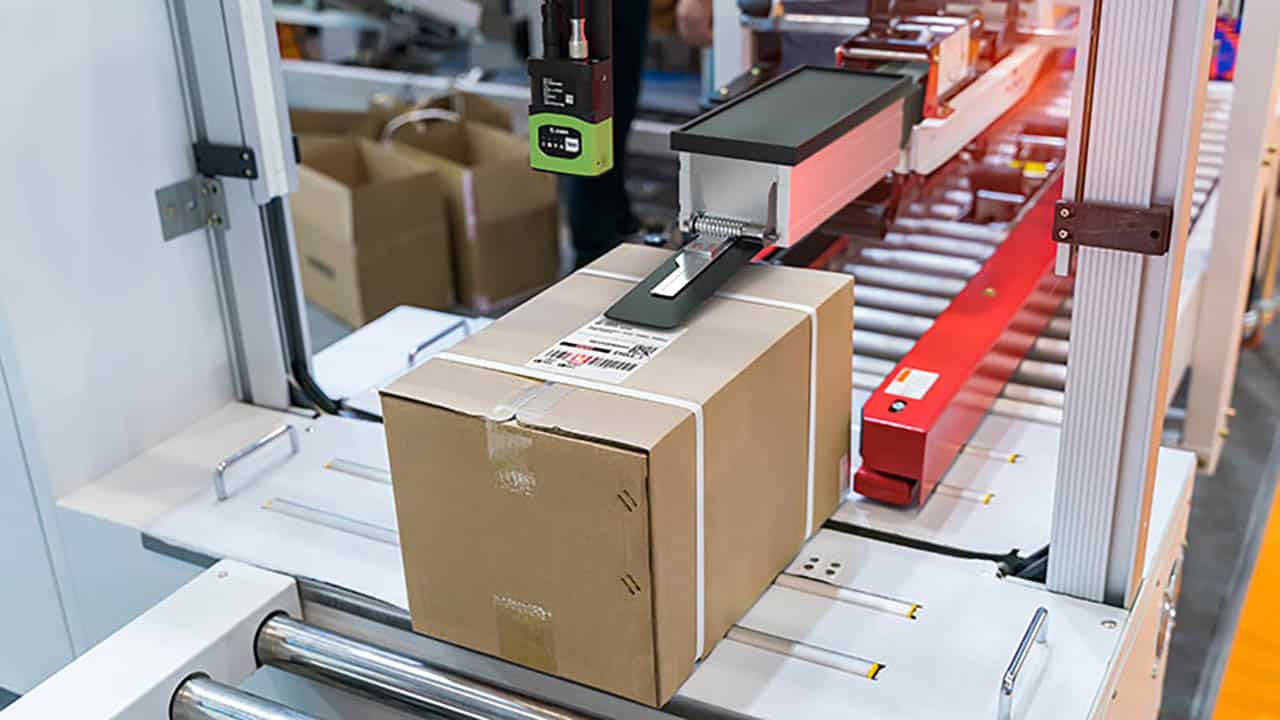
Machine vision technology represents another approach to automated pallet scanning. Sensors and advanced software combine to capture labels as pallets pass through scan zones. Cameras cover pallets from several angles, with advanced systems adding inspection and verification to the mix.
This vision-driven approach forms a valuable link between traditional fixed scanning and fully automated workflows, addressing one of the most common (and fixable) sources of delays. Delivering the precision of fixed readers, vision-enabled systems provide a helpful step towards full visibility. This supports next-generation warehouse automation.
What Are the Challenges of Manual Pallet Scanning?
Manual pallet scanning may seem easy to implement, but this convenience comes at a cost; this approach prompts inefficiencies and errors while also introducing additional safety considerations. Common challenges include:
- Shrink wrap and glare. Shrink wrap provides stability for palletized loads, but it also reduces visibility. Multiple layers of plastic may cover barcodes, making them difficult to read without time-consuming adjustments. When automated systems are designed to handle glare, there is no need for worker-driven repositioning.
- Barcode orientation. Barcode labels won’t necessarily face the same direction after pallets are loaded. Workers may be forced to rotate loads but could still find identifiers difficult to locate. Automated systems can capture multiple sides and angles to bypass this problem.
- Damaged or obstructed labels. If labels are torn or covered during handling, scanning solutions may fail to capture critical details. Machine vision systems with advanced optics can often capture these damaged labels.
- Labor and throughput. Time spent searching for labels adds up, leading to increases in labor requirements. Meanwhile, throughput decreases as pallets stall. Automated solutions allow for a consistent flow of pallets to support strong throughput.
- Limited verification. When workers struggle to keep up with manual workflows, they risk missed scans or misreads. Further verification challenges emerge as workers tackle mixed pallets. Validation cannot proceed until scans deliver new information, and, when those are automated, systems are better equipped to reconcile items in real time.
- Safety. Workers who operate manual scanners may need to travel among forklifts or other moving equipment. This can place them at risk. Automated scanning shifts these workers away from high-traffic zones.
How Does Automated Pallet Scanning Work?
Several elements come together to form automated pallet scanning systems that capture identifiers and enable data-driven warehousing strategies — without the need for handheld, human-guided scanning. Instead, pallets move through scan zones equipped with fixed readers, cameras, or sensors. These systems can capture labels from many angles, without requiring workers to reposition pallets or the items they contain.
In a single pass, automated solutions can obtain needed information and validate it against inventory or shipment records. Integration is key; data captured by fixed readers or machine vision is transmitted to WMS or other centralized systems.
Machine vision extends the value of pallet scanning, moving beyond barcode reading to count cartons or measure dimensions. Vision-guided systems identify damage or discrepancies. Performance depends on camera placement and lighting, although pallet speed and label quality can also have an impact. Well-designed systems will balance these concerns to create a consistent flow of pallets that are properly scanned and validated.
When Does Automated Pallet Scanning Make Sense?
Not all warehouse systems necessarily demand end-to-end automation. Rather, automation is at its best when applied strategically to address weak points, and with a modular approach.
In general, however, automation is worthwhile when manual scanning is directly linked to errors or delays.
- High pallet volumes. Scanning should not limit throughput. Automated solutions allow more pallets to move through dock doors and other flow points. This allows large distribution centers and retail operations to keep pace with the hundreds (even thousands) of pallets that cross their docks every day.
- Dock congestion. Busy shipping and receiving docks are common choke points, but automated solutions keep pallets moving even as information is captured. Tunnel systems allow pallets to move easily through dock doors even as information is captured.
- Repetitive scanning. High volumes of pallets mean continuous scanning, which reduces the margin for delay. When human workers drive this process, they often encounter distractions or fatigue. Automation shifts the worker’s role towards strategy and oversight, allowing technology to tackle the repetitive side of pallet scanning.
- Read issues. Handheld scanning devices may struggle to capture damaged or obscured barcodes. Automated solutions use advanced optics to recognize labels — through shrink wrap and even when labels are in less-than-ideal condition.
- Inventory and shipment discrepancies. Misreads caused by manual workflows have ripple effects and may shape the big picture of inventory management. Inventory counts become distorted, stockouts and overstocking are more likely. Automated scanning can reduce missed scans and data-capture errors. This improves inventory accuracy, ultimately ensuring that the right products are shipped to the right customers.
- Mixed pallets. A single pallet-level barcode may confirm the pallet’s identity without verifying every carton it contains. Operations that need carton-level verification may benefit from machine vision or other automated scanning approaches capable of capturing multiple carton identifiers as the pallet moves through a scan zone.
- Traceability or documentation requirements. Highly regulated industries (such as pharmaceuticals) demand meticulous documentation. Automated solutions furnish this by producing a continuous record of pallet movements. These records form the basis for compliance and audit readiness.
- Improved analytics. Data-driven warehouses use scans as a critical source of insight. Automated scans supply AI-powered systems with a consistent source of data. This is ultimately analyzed to show how pallets actually move through the warehouse, and where SKU mixes or labor allocation come into play. Based on these insights, warehouse leaders can optimize staffing and layouts.
When comparing pallet scanning systems, consider read rates and accuracy, barcode or RFID requirements, WMS integration, throughput, label placement and condition, the physical scan point, and whether carton verification, inspection, or image capture is required.
Find the Right Pallet Scanning Approach with Peak Technologies
The right pallet scanning approach depends on your workflow, volume, and visibility needs. Peak Technologies can help evaluate options ranging from handheld and forklift-mounted scanning to RFID, fixed scanning, and machine vision.
For more advanced automation and pallet visibility, Peak Automation Intelligence, the automation division of Peak Technologies, offers solutions such as Pallet Insights.
Contact Peak Technologies to discuss your warehouse scanning needs.